
The way we grow our food and care for our plants has fundamentally shifted, and experts are predicting that data-driven plant care will become commonplace. In Pocket Diagnostic®’s latest blog, horticulturist and business owner David Haddad explains how everyone can benefit from this new era of Precision Gardening. By making smart, data-driven decisions based on things like seasonality, species, location, and climate, you can ensure your harvest is your most successful yet.
The Dawn of Precision Gardening
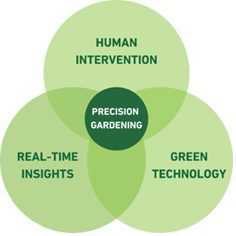
In the past, ‘Precision Agriculture’ was a term reserved for industrial giants using expensive satellite arrays and autonomous tractors. Across the UK and Europe, driven by a desire for self-sufficiency and resource efficiency, the ”garden-to-table” movement has merged with ‘green-technology’, which has brought precision tools directly to everyday growers.
With fluctuating food prices and a higher awareness of our environmental footprint, growers are turning to smart tools to maximise their yields. From pocket-sized sensors that monitor soil moisture, pH (acidity), and NPK levels (essential plant nutrients) to plant-health diagnostic tools like Pocket Diagnostic®’s range of rapid tests, these green-tech solutions are now as accessible and easy to buy online or at a local nursery, as buying a pair of gardening gloves.
Precision Gardening for Every Level of Grower
Precision Gardening isn’t just for tech enthusiasts; it scales to fit every situation:
- The Home Gardener & Allotment Holder: It means no longer guessing when to water or plant. Having real-time insights means the difference between a plant thriving or dying. It helps transition anyone from buying store-bought herbs to picking home-grown goodness.
- The Urban Farmer: In cities where space is at a premium, one example of precision gardening utilises vertical growing towers with built-in irrigation and UV lights to maximise yield in tiny spaces. Even without a traditional garden space, gardeners are maximising growing potential.
- The Large-Scale Agricultural Enterprise: It means shifting away from costly, wasteful routines and moving toward highly targeted, efficient crop management. That protects food security, profit margins and the environment.
Why Plant Health Matters at All Levels
Whether you are managing a single tomato plant on a balcony or hundreds of acres of commercial crops, plant health is everything.
For the amateur or professional gardener, a sudden disease outbreak means wasted time, money, and the disappointment of a ruined harvest. For the commercial farmer or arborist, plant diseases are a threat to livelihoods, food security, and regional biodiversity.
Many plant pathogens act as “silent killers” and if left undetected can wreak havoc on your plants, trees and crops. For example, a pathogen like Phytophthora spp., described as the “serial killer” of the plant world, is one of the biggest culprits for root rot. A plant can look perfectly healthy on the outside while an infection spreads rapidly underground or to neighbouring plots. Rapid testing has a key part to play here and products like the Pocket Diagnostic® range are low cost, portable, easy to use and gives a real-time diagnosis in just minutes.
The Smart Gardener’s Tech Toolkit
To keep plants healthy, we shouldn’t be afraid of technology. Instead, we can use it to make our lives easier. Here are some of the top smart-gardening tools making waves:
- Smart Irrigation: Systems that connect to local weather forecasts to prevent overwatering. This is crucial because water-moulds like Phytophthora thrive in saturated soils and easily spread through water runoff.
- Automated Weeding Robots: Small, solar-powered devices that use AI to pick out weeds. They don’t just steal nutrients; weeds can host nasty plant diseases like Potato Virus Y (PVY).
- AI Plant-Care Apps: Mobile apps that connect to garden sensors, send real-time notifications and care suggestions straight to a smartphone. (Check out these trending gardening apps for 2026)
- Rapid-Testing Kits: Simple tools that allow for professional-grade disease diagnostics right where the plant is growing.
Integrated Pest Management: The New Gold Standard
The rise of technology has also changed how we protect our crops. Recent updates to UK Regulations under the government’s National Pesticides Action Plan emphasise an environmentally conscious approach called Integrated Pest Management (IPM).
The acceptance era of “blanket spraying” chemical pesticides is ending. In contrast, the more sustainable IPM approach focuses on long-term prevention using a mix of smart techniques:
- Biological Controls: Using natural predators like ladybirds to eat sap-sucking, disease-transmitting aphids.
- Cultural Controls: Rotating crops and choosing disease-resistant plant varieties.
- Precision Detection: Identifying a specific disease threat early before it can spread. (Take a look at this Pocket Diagnostic® blog for tips on how to identify the signs of disease on plants, trees or crops)
Regulations now ask both professional agronomists and home gardeners to minimise chemical use, turning to pesticides only as a last resort, reaffirming the fact that early detection is key.
Where Rapid Testing Fits: The Pocket Diagnostic® Advantage
Even with the best soil sensors and smart watering setups, pathogens can still find a way into the soil. Waiting for a laboratory to process a plant sample can take days – valuable time that a disease uses to multiply and destroy a crop.
This is exactly where Pocket Diagnostic® plant health lateral flow tests fit in. These low-cost, portable rapid test kits bring the laboratory straight to every garden, allotment, or field. Working just like a rapid lateral flow health test for humans, these kits deliver accurate results using a quick, in-field sample, and contain clear instructions on how and when to test.
The Pocket Diagnostic® range empowers you to immediately detect major threats, including:
- Phytophthora spp. – A devastating group of water-moulds causing root rot and blights.
- Erwinia amylovora – The culprit behind Fireblight, which threatens apple and pear orchards.
- Ralstonia solanacearum – The bacteria responsible for wilting tomatoes, peppers, and potatoes.
- Potato Virus Y (PVY) – A massive global threat to potato crops.
The Way Forward
Precision is the ultimate path to productivity and plant protection. By combining smart gardening and green technology such as Pocket Diagnostic® rapid tests, gardeners can protect their investment, reduce unnecessary chemical use, and ensure a successful garden-to-table journey. Act before it’s too late – test early, and grow with precision.